
When is a holiday more work than your everyday life? - by Geoff Trappett OAM

Having just enjoyed the festive holiday season I wonder how many outside of the disabled community thought of some of the extra little nuances that a holiday period brings to a disabled person's life?
For instance, when you choose somewhere to stay for a holiday, you probably thought about price and location right? Well for a disabled person they thought of that plus accessibility, plus whether they could get rental adaptive equipment, plus whether they could access support workers in the area to name just a few.
How should I talk to my children when they ask about disability and difference? – by Eliza Ault-Connell AM

“Mummy look at that ladies legs”.
Each and every time I set foot in public I can be assured of two things. Comments from children who say it as they see it. Parents madly trying to hush their child to avoid an awkward moment or hoping that I may not have heard what their child had said.
Carer or Career… You decide - by Marlena Katene

I was in year 10 and all my girlfriends were getting part-time jobs. They had a variety of jobs such as Big W, Donut King and the standard McDonalds. My mother was always tough but fair and during this time in my life, there was not going to be an easy way out.
Why disability award-wins at the Logies and in the Sporting Hall of Fame means so much more to wheelchair users like me – by Marayke Jonkers
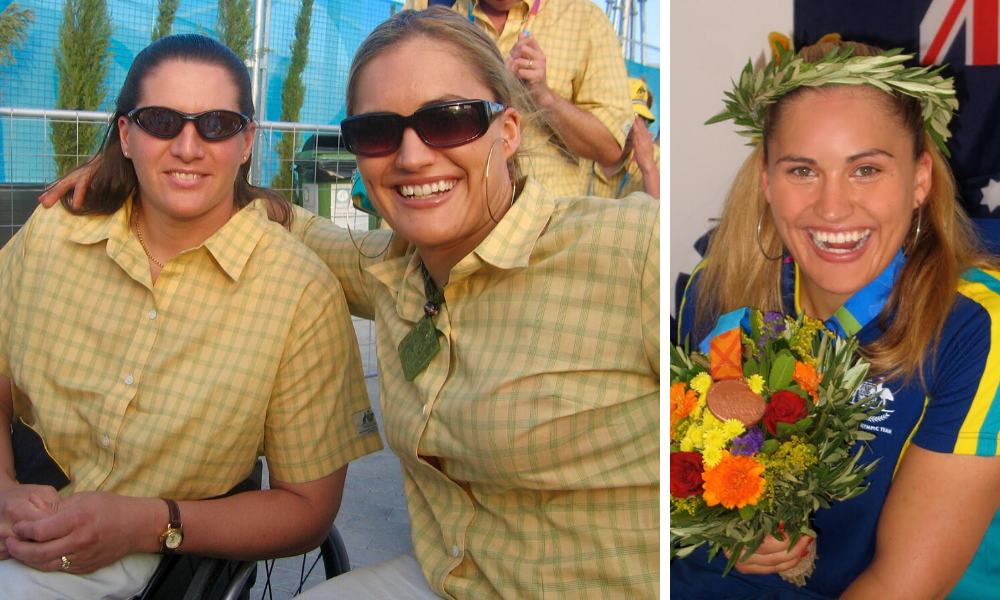
While watching The Australian Sporting Hall of Fame, I did a happy dance at home, not just because I know the winners and their athletic achievements but because it is a huge step forward for disability representation.
Louise Sauvage was bestowed with Australia’s greatest sporting honour when she became the first Paralympian to be elevated to “legend” status joining icons like Dawn Fraser.
Logie Award-winning Paralympian Dylan Alcott was nominated for the prestigious Don Award.
Our greatest Paralympian Mathew Cowdrey was inducted as a member.
Clinical vs Personal Touch: Why both are vital in clinical practice to those with a disability - by Jess Cochran

Touch- to bring a bodily part into contact with especially so as to perceive through the tactile sense: handle or feel gently usually with the intent to understand or appreciate. (Merriam-webster.com, 2019)
Note: Consent is an important foundation when using touch in clinical practice. Having consent and the patient being informed of a procedure before and during practice is imperative to building a strong practitioner-patient relationship.
Peer Support - The True Show Stopper in the World of Disability Sports - by Geoff Trappett OAM
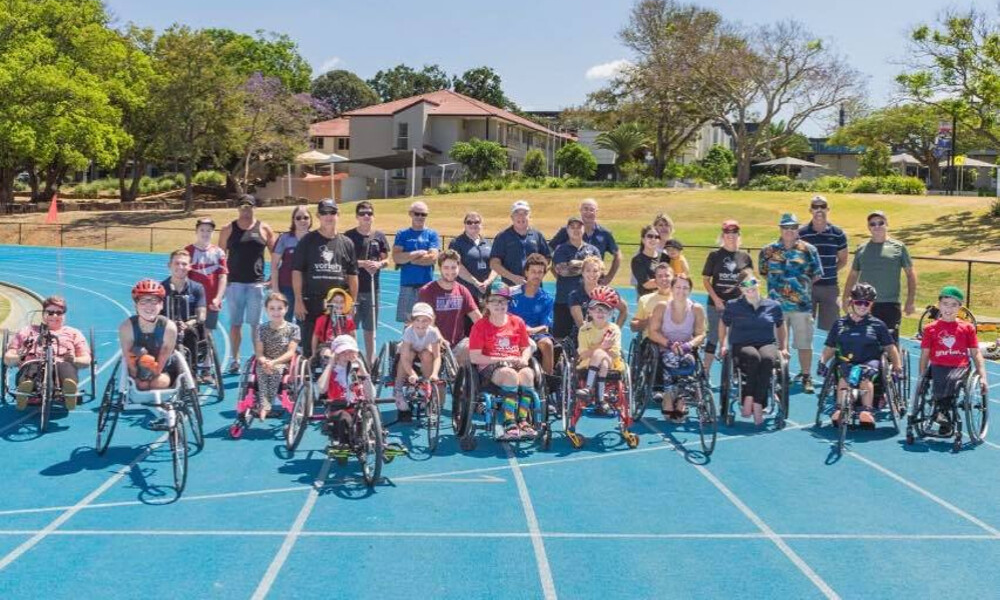
We are stronger as a community than alone.
The old adage of something being bigger as a whole than the sum of its parts is never more evident than when we talk about peer support in the disabled community.
Peer support is broadly defined as ‘an initiative consisting of trained supporters, and can take a number of forms such as peer mentoring, reflective listening, or counseling’. However pure words don’t do the concept justice.
Are Disabled People Getting a ‘Fair Go’ in the Workplace?

Work, for many, is a necessity. For some, it’s a passion.
And for others, it’s an uphill battle just to get your foot in the door.
Did you know the unemployment rate for people aged between 15 and 64 in Australia is 4.9%, but that the unemployment rate for those with a disability is 9.4%?
In New Zealand, it’s 4.3% to 10.6%.
Recent research also found that 14% of Australians with a disability reported facing discrimination, with disability-based discrimination worst for unemployed people (affecting almost one-third of Australians with a disability).
Meet Ian Lappin, Invacare's Territory Business Manager

Ian Lappin is Invacare's Territory Business Manager, and his role revolves around setting up wheelchairs with the end-user. Ian's goal is to "achieve the best result for these people, all-round," and his passion is definitely working with powerchairs, and he "can't wait for the new Alber range which is hitting the market soon."
Aged Care and Day Care – A Perfect Match?

What do 4-year-olds and 80-year-olds have in common?
Considerably more than you might think, including (but not limited to) painting, dancing, reading, walking, singing, cooking and story-telling!
These are just some of the potential activities incorporated into intergenerational care programs, in which Aged Care and Day Care are combined, and the residents/attendees of each group intermingle and socialise with one another.
Education - Segregation Vs Inclusion
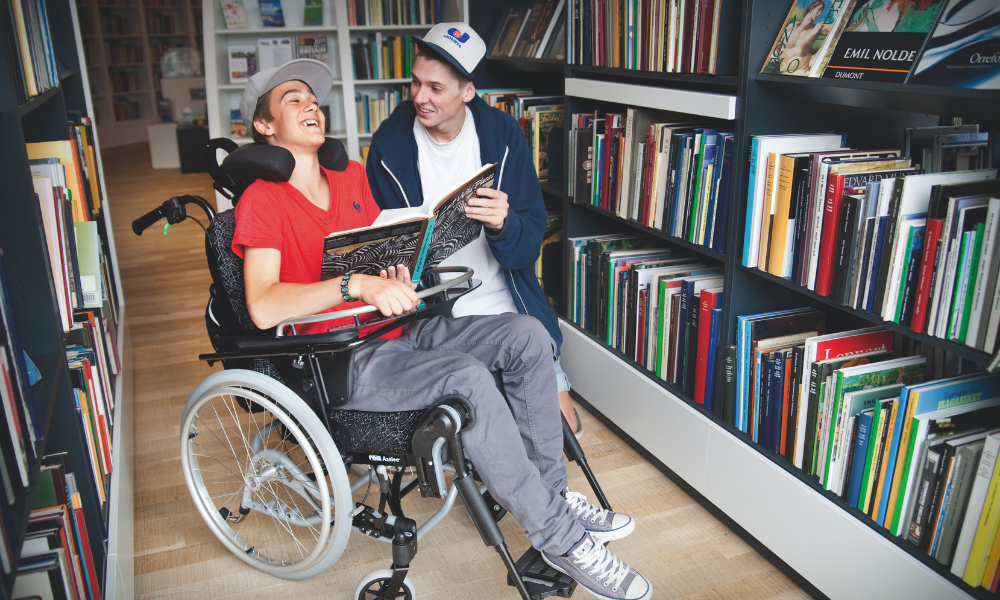
“Everyone has the right to education.”
Article 26 of the Universal Declaration of Human Rights, adopted by the United Nations General Assembly in 1948, made it clear to the world that we as a species consider education to be fundamental to our existence.
However, just because something is fundamental, does that mean it’s a reality? Is it actually being done, and done right?