
Navigating Medical Trauma as a Lifelong Healthcare User - by Anja Christoffersen
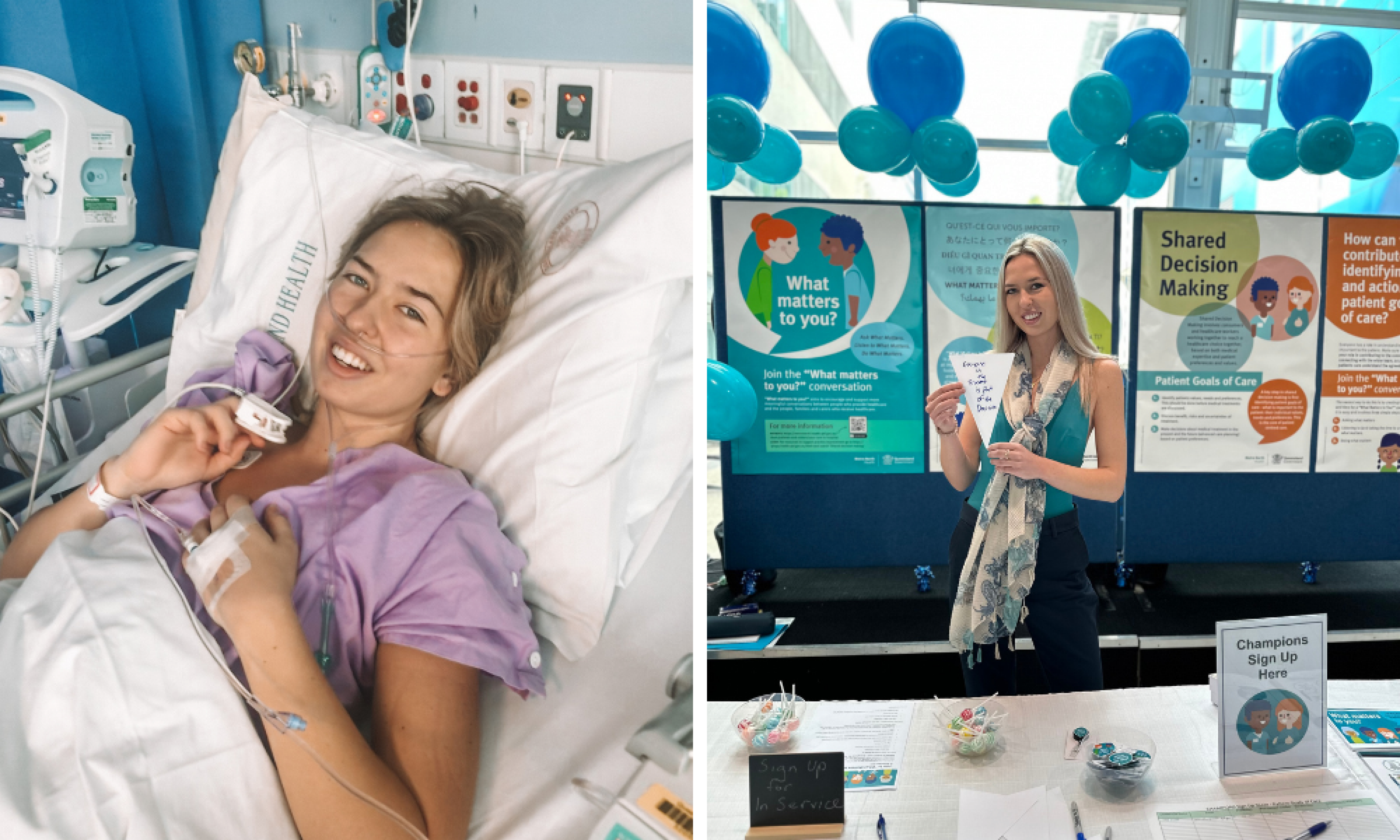
This may be one of the most vulnerable pieces I have ever written. I feel uncomfortable and exposed, but in 2018, I had a realisation that led me to understand something that would become a bigger part of my life as my experiences compounded: Medical trauma.
Growing up, I saw the hospital as a second home. I was there more than I was anywhere else at times. It was my only constant in life: the bright white lights, sterile surfaces, beeping of machines and pagers, and people scurrying around in scrubs. It brought a sense of familiar comfort. A place where I knew I would be taken care of, and I would leave in a better state than when I came in.
My childhood hospital experiences frequently bleed into my everyday life. I often think it’s ‘just the way I am’, but what if this is the way I have become because of my environment. No one enjoys the constant beeping and noise that prevents sleep in a hospital bed, but trying to fall asleep with the heavy silence at home? Forget it. Sick but needing to eat something? Vegemite toast. Long nights in hospital emergency departments as a child, they would only be able to make toast and usually, Vegemite was the most readily available. From this, mum and I now love a Vegemite toast, much to the disgust of the rest of my Danish family, that has a strong aversion to the taste.
The inward expressions are harder to navigate. I can’t pinpoint an exact time when the running feeling started. I’m far from a runner, physically or metaphorically, but sitting in hospital waiting rooms my body pulses with adrenaline and I feel like I could run a marathon at the speed of light. Why do I want to run? I don’t want to be let down by a healthcare system I have to rely on for the rest of my life. Over the years I’ve lost parts of my body and myself at their hands, and I blame myself for it. Maybe if I ran then, I could have prevented my poor experience?
There’s no single face or fault to this fear of mine; we are all just doing the best we can. But between us, this home is one I no longer associate with being taken care of in, and I want to stop visiting.
I remember my first NDIS Planning meeting, and I was trying to explain the feeling I get in these healthcare interactions, my budding avoidance patterns, and how I struggle to speak up and advocate for myself. She pointed out that my career is based on healthcare advocacy, and how ironic it is. The truth is, I have all the tools in the shed which I frequently (and relatively effortlessly) use to create a better experience for others, but when I am frozen in existential fear for myself, I can’t even pick them up.
I’m embarrassed by the small moments that bring out this side of me, but I hope that by sharing, others can relate. My multitude of specialists are all in my nearest major city, 2 hours’ drive away. As I had developed more generalised and worrisome symptoms and needed greater coordination of care between specialties locally, my GP referred me to General Medicine specialists at the regional hospital. I was seen promptly, had additional tests run, an iron infusion and a follow-up telephone appointment a month later. We decided to continue monitoring for an autoimmune condition after markers in my blood, and scheduled the next appointment for a month, automatically by telephone. When that second telephone appointment came around, I waited by my phone all day to receive no call. I assumed there was an issue in the clinic and they hadn’t had time for me, so I waited for contact from the hospital for a rescheduled appointment time.
After 4 weeks, I’d had no contact from the hospital at all. I’d begun getting worse and needed help, this appointment had become quite urgent for me. I called, and explained, getting into a back and forth with the booking officer - her insisting there was a call to my ‘work number’, which she could not confirm the phone number of, but was only able to confirm my main contact number – which I didn’t receive a call on. Getting past this, she announced I’d been discharged from the clinic and wouldn’t be seen again. I should have spoken up for myself, but instead, the running feeling overwhelmed me. I simply said ok, hung up the phone, and cried. I needed that appointment, but both the system and I were overwhelmed.
It can be scary to accept that experiences like this will always be part of my life, and that sometimes I’m frozen in the tool shed when it's a matter of life (or quality of it) and death. I know I am a skilled health and disability advocate, with high health literacy and an MBA specialising in Health Services Management, so if I am left defenceless, who is looked after? I am often asked to reimagine the future state of healthcare, and I have a million answers. Put simply, what is most important to me is that we build a system based on trust; that we can trust our medical professionals to care for us and that they are adequately resourced to perform at their best, but that they also trust us in our expertise in our own body and experiences.
About the Author:
Anja Christoffersen is an award-winning disability advocate, social entrepreneur, author and model, selected as one of the International Day of People with Disability Ambassadors for 2023. Anja walked Mercedes Benz Fashion Week Amsterdam at 17 years old, and wrote a book (Behind the Smile) before turning to entrepreneurship and founding the Women with Disabilities Entrepreneur Network, Champion Health Agency, SHH!T Happens, and co-founding Against the Grain Coffee.
Add comment