
THE JOURNEY TO BUILDING AN ACCESSIBLE HOME - PART ONE – By Ian Walker
Kia ora koutou katoa / Hey everybody!
It’s been a wee while since my last blog, and a lot has happened since. Let me explain. A number of months ago, my partner and I decided it was time to purchase a house and property here in Auckland, given we had decided this was where we wished to stay permanently, following our move from Christchurch in 2021.
With this thought in mind, we started our search for an existing house and property that would fit our accessibility needs — one that could be modified without too many complications. We also wished to remain here in Manly, Whangaparāoa, a longish stone’s throw from Manly Beach and an hour or so north/northeast of Auckland City, New Zealand.
What a journey this turned out to be! Trying to find a suitable two- to three-bedroom single-level home on a flattish section turned out to be a far less straightforward search than first anticipated — especially one within our current locale.
We looked at one particular three-bedroom house here in Manly, on a cross-lease section that had undergone quite extensive alterations inside. The section was mostly flat, with a double garage to the front. It would still require additional modifications to make it fully accessible, but the “bones” were there — and those bones were good. One problem! The original asking price was approximately NZ $525,000 more than the Government Valuation (GV) and therefore totally unrealistic, as the real estate agent said to us. In the end, the owner reduced his price by $250,000. We submitted an offer that was $200,000 above GV and above current market valuation, due in part to the exorbitant price. However, as noted before, we’d need to carry out further modifications to make it fully accessible. We also discovered that the owners hadn’t received permission from the other cross-lease holders, nor had they applied for council consent prior to the alterations being carried out.
We turned our backs on that house to look at others within our preferred locale. We did find another house we felt would be great to have and modify into a fully accessible home. It was on the flat, open-plan, and therefore accessibility modifications would be more straightforward — or so we thought. We even had a housing occupational therapist view the house to provide a report on how best to make it fully accessible. Her report would go to ACC to ascertain whether they would contribute financially to the modifications required. We also had a house inspector view the property to check that everything in the house was up to the building code and properly constructed.
Unfortunately, we discovered that no Certificate of Code Compliance (CCC) had been issued following construction, which gave us no assurance whatsoever that the house was sufficiently and properly built. The lack of a CCC also meant that no bank would grant a mortgage on the property. Therefore, we had no choice but to walk (or wheel) away from the offer we had made to buy the property. This lack of a CCC, building consents, and proper building practices derailed other properties we felt would be suitable to modify into a fully accessible home. Our score stood at 5–0 against! The whole process was turning into a real and draining ordeal. My partner then suggested an idea that changed our life for the better: what if we build a fully accessible home from scratch? What an absolutely brilliant idea!
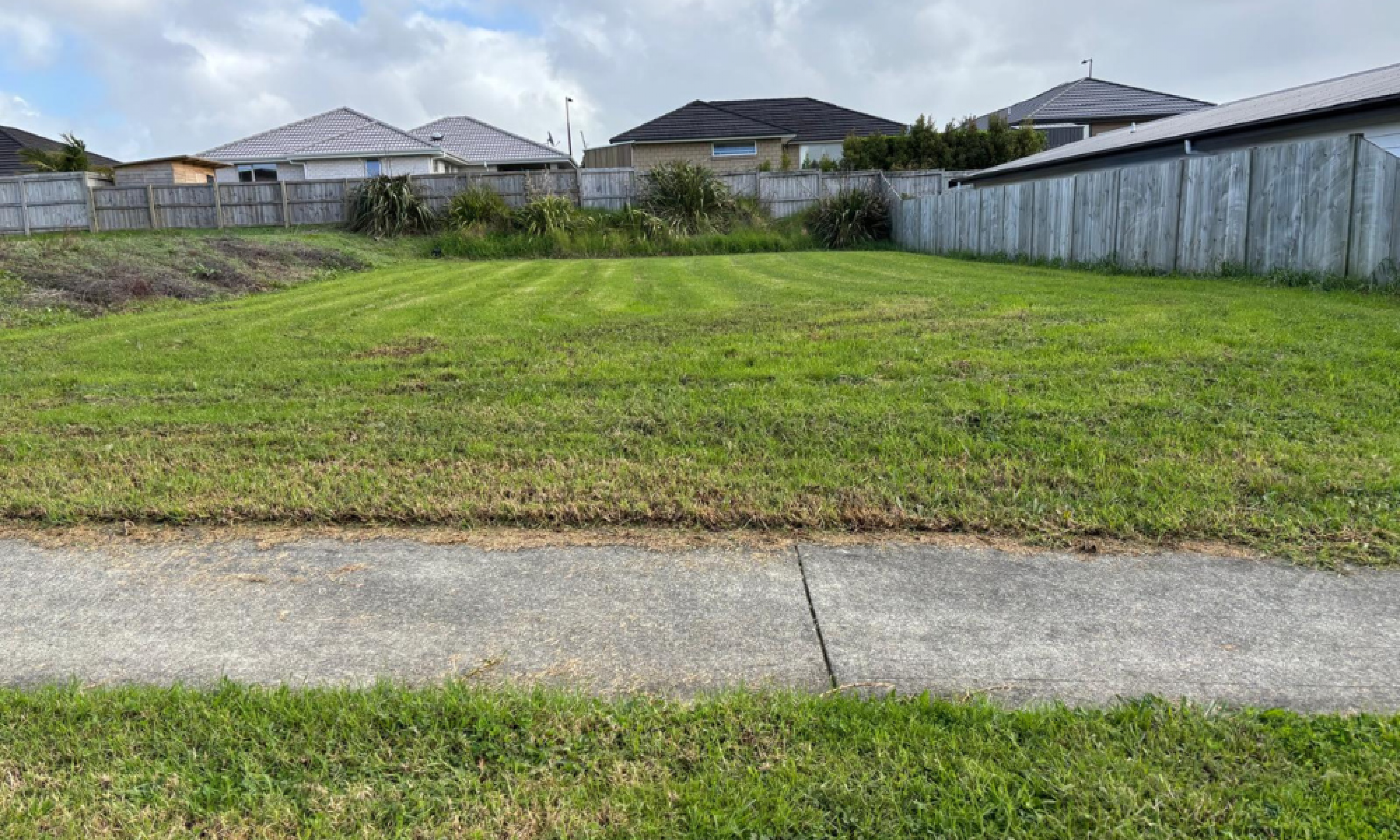
This changed everything, as we started to look for suitable sections on which to build our forever, fully accessible home. Our search proved most successful when we located an ideal, pretty flat section in Warkworth — a lovely township almost 60 km north of Auckland and about 50 km from where we are currently on the Whangaparāoa Peninsula. We made an offer and, lo and behold, to our amazement and absolute relief, it was accepted. The deal is now done and dusted; monies have been exchanged; all paperwork completed; and the title updated.
So, what’s next, you may ask? For that answer, you’ll have to wait for my next blog post, where I’ll go through the next stage of the build journey — a journey that so far has certainly exposed the trials and tribulations a wheelchair user like me, and my partner, face in trying to find our forever fully accessible home.
No matter how eventful the journey may be, it is worth taking for the growth it brings.
About the writer
Ian Walker is a 57-year-old C6 Quadriplegic Incomplete. Ian lives in Christchurch, New Zealand, and has survived two separate spinal-cord-injury-related accidents over the past 14 years. He is a motivational speaker who talks about facing adversity, cycle-road safety, living with a disability, and being a one-per center.
Ian also enjoys life coaching, which he utilises through his business BMotiv8d to assist those with or without a disability who lack motivation, direction, or confidence; those who feel disorganised or unfulfilled; and those who need encouragement or help to set priorities — showing them how to realise their true potential.
Add comment